“If consumers see or hear that feature and immediately think of one business, there may be something worth protecting.”
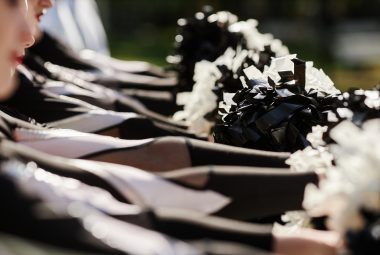
My Chemical Romance (“MCR”), the emo-rock band known for theatrical performances and emotionally charged storytelling, recently found itself on the receiving end of legal action following the use of dancers dressed to resemble the Dallas Cowboys Cheerleaders (“DCC”) during a Hollywood show.
The dispute resulted in a temporary restraining order and injunction aimed at preventing MCR from using DCC’s signature uniform in a way that could cause confusion, trade off decades of goodwill and damage the DCC brand.
The dispute was resolved quickly, but it provides an interesting lesson for brand owners: your most valuable intellectual property may not be your name or logo.
MCR did not need to use the words “Dallas Cowboys Cheerleaders” to evoke DCC. The uniform itself was immediately recognisable. In other words, the brand extended beyond its name and logo to its distinctive visual appearance.
Beyond names and logos
Most businesses understand the importance of protecting their name and logo. What is sometimes overlooked is that trade mark law can potentially protect much more. Trade mark laws can protect a much wider range of brand assets. These “non-traditional” trade marks can include shapes, colours, sounds, patterns, position marks, motion marks, multimedia marks and holograms.
This opens up some interesting possibilities. Think about a distinctive product shape, a particular colour used consistently across a brand, a sound consumers instantly associate with a business, or a pattern that has become synonymous with a particular product.
If consumers see or hear that feature and immediately think of one business, there may be something worth protecting.
Is it really a trade mark?
Registering a non-traditional trade mark is not always straightforward.
A trade mark must be capable of distinguishing one business’s goods or services from those of another. With a conventional brand name or logo, consumers are accustomed to treating the sign as an indication of who is behind the product. This may not be the case with a colour, shape or pattern which could be perceived as decoration, a design choice of functional feature. That can make establishing distinctiveness more challenging.
However, an initial objection does not necessarily mean the end of the road. Where a business can show that, through extensive and consistent use, consumers have come to recognise the feature as identifying its goods or services, it may be possible to establish acquired distinctiveness. In fact, the DCC cheerleading uniform is protected as a trade mark in the US on the basis of acquired distinctiveness, which gave DCC strong rights when enforcing its IP against MCR.
What makes your business recognisable?
The lesson for brand owners: look beyond the obvious.
Ask how customers actually recognise your business. Is there a colour you have used consistently for years? A distinctive product or packaging shape? A recurring pattern? A sound, animation or other feature that customers immediately associate with you?
These elements can build significant goodwill even though they do not form part of the company’s name or conventional logo.
The DCC dispute is an eye-catching reminder of just how powerful those visual cues can become. When a feature is distinctive enough that someone can evoke your brand without even mentioning its name, it may be time to ask whether your IP protection should extend to it too.